

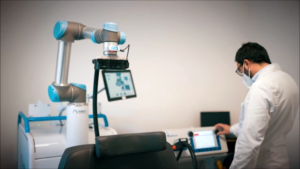
On October 7, 2026, the French magazine Le Point published a feature on neuromodulation, presenting electroconvulsive therapy (ECT), transcranial magnetic stimulation (TMS) and other brain stimulation techniques as new options for patients with psychiatric disorders. The article is illustrated with a photo of a robotized TMS session for depression at the Institute of Neuromodulation (INM)…
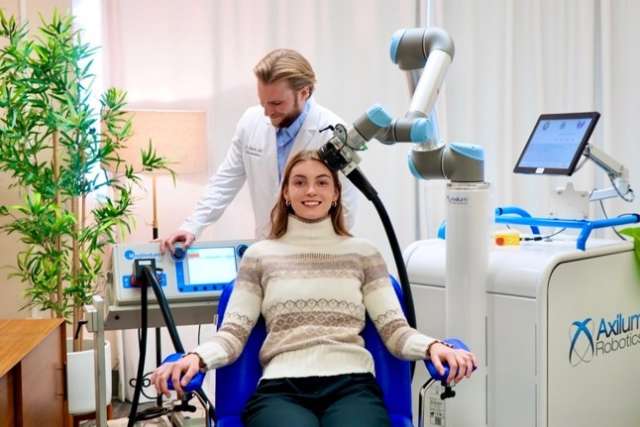
Professor Rocco Antonio Zoccali, based in Reggio Calabria, Italy, presents on his website how he delivers transcranial magnetic stimulation (rTMS) with Axilum Robotics TMS-Cobot, for patients in psychiatry and neurology. Patients sit comfortably with their head resting on a cushion and wear a cap that identifies the correct coil position for delivering repeated magnetic pulses….
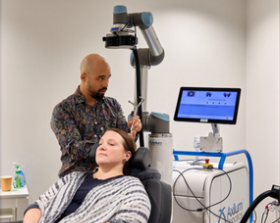
In an article published in January 2025, UCLA Health presents its “precision TMS” approach to depression, in which a brain MRI is used to neuronavigate to a personalized stimulation target for each patient. The center is using the Axilum Robotics TMS-Cobot to target the stimulation site: it positions the coil to within a millimeter at…
In November 2025, Avive Health announced that its Avive Clinic Brisbane, in Australia, now offers a robotic-assisted TMS platform alongside its established TMS machine, for people whose depression has not responded well to medications or therapy. The robotic-guided system can combine MRI-informed brain targeting where appropriate, robotic coil positioning and real-time motion tracking, which together…
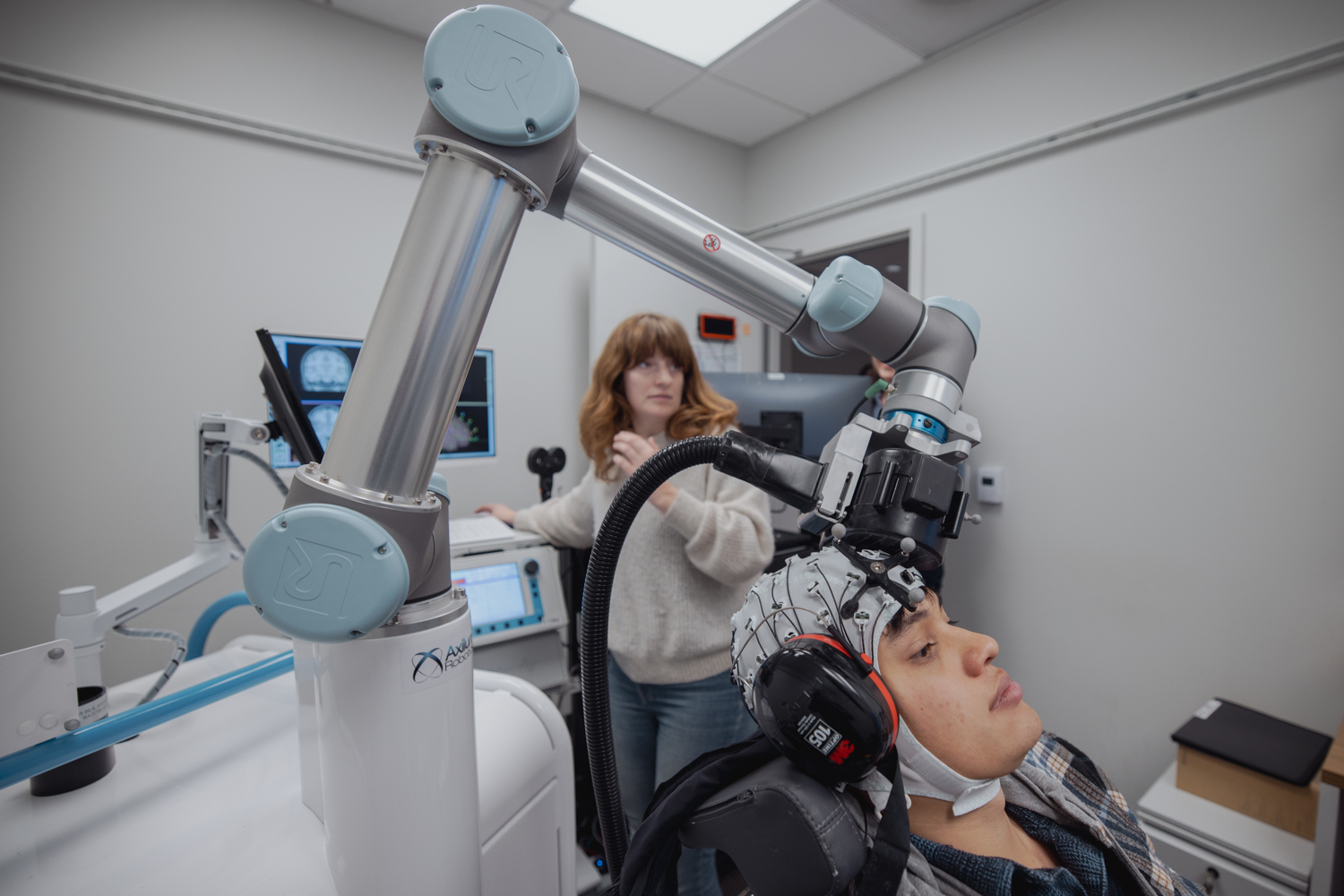
In July 2025, Stanford’s Wu Tsai Neurosciences Institute announced the second round of pilot grants from its Koret Human Neurosciences Community Laboratory, which offers researchers across the university free training and support to use non-invasive tools such as transcranial magnetic stimulation (TMS) and high-density EEG. Two of the funded projects rely on TMS: one explores…
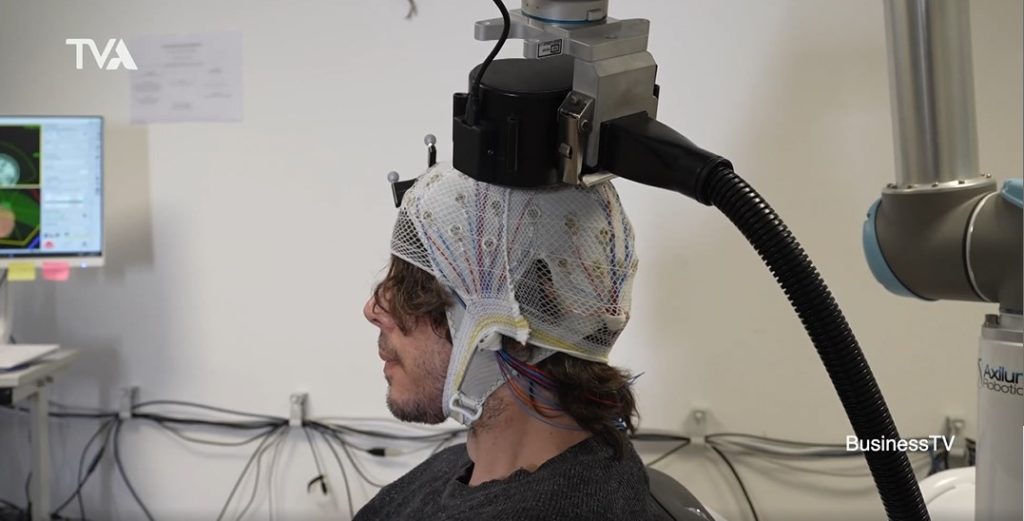
Professor Berthold Langguth, psychiatrist at the Medbo Clinic in Regensburg, Germany, was a guest on the Kopfsache program on TV Aktuell, the local Bavarian TV station. The program, broadcast in German language on April 25, 2025, focused on the use of high technology in psychiatry. Starting at 4’30”, the program shows the use of an…
The Institute for Cognitive Neuroscience of HSE University in Moscow presents the TMS-Cobot among the equipment of its laboratory cluster, in its institutional brochure. The robotic system automatically controls the positioning and orientation of compatible TMS coils, under the control of an optical navigation tracking system. It is used for brain-navigated TMS, which can be…
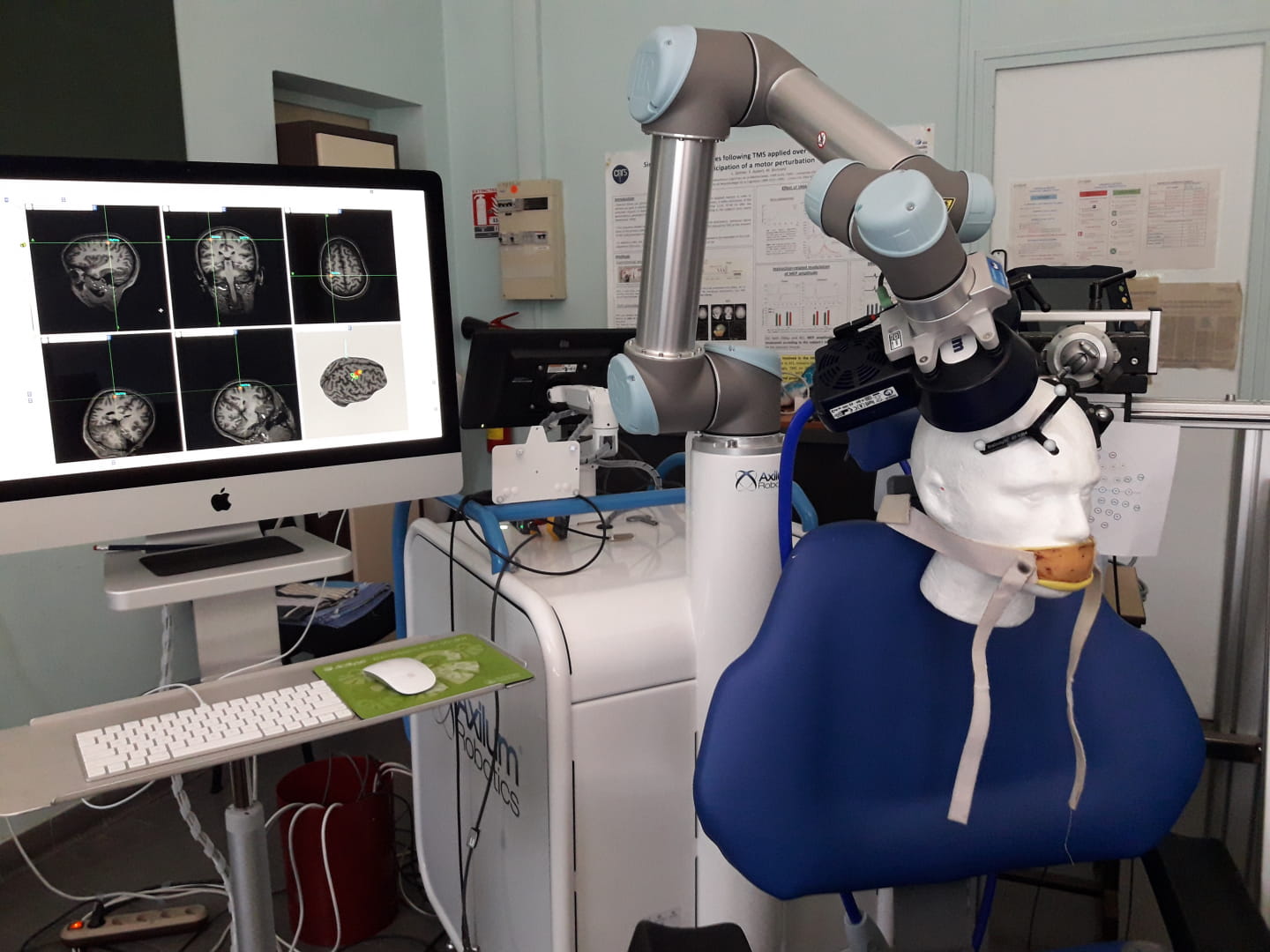
The NeuroMarseille institute (Aix-Marseille University) presents, among its technological platforms, a robotized and neuronavigated (MRI-guided) TMS system combined with simultaneous EEG recording, under the scientific management of Mireille Bonnard (CNRS) and Olivier David (INSERM). Used with healthy participants, it creates a brief, precisely targeted disturbance of brain activity, for example during cognitive tasks or at…
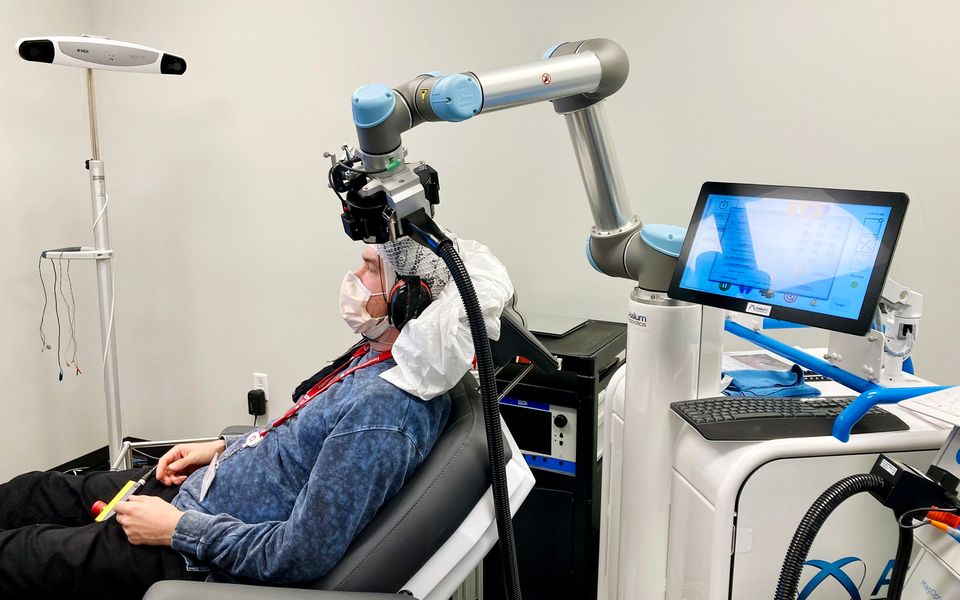
In a press release dated June 24, 2024, the University of Helsinki presents two studies, carried out with researchers from Stanford University, that aim to make magnetic stimulation (TMS) treatment for depression more personalized. The team recorded the brain’s electrical responses by EEG during stimulation, with a robot holding the TMS coil, to understand which…
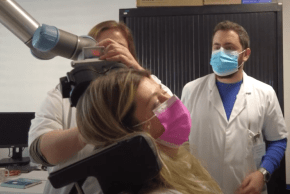
In February 2023, the teams of the psychiatry university hospital department of GHU Paris received cutting-edge magnetic stimulation equipment as part of the work of the Institute of Neuromodulation. The project, which combines direct patient care and research, is a winner of France’s “Assises de la santé mentale” and is supported by the government. GHU…