In July 2025, Stanford’s Wu Tsai Neurosciences Institute announced the second round of pilot grants from its Koret Human Neurosciences Community Laboratory, which offers researchers across the university free training and support to use non-invasive tools such as transcranial magnetic stimulation (TMS) and high-density EEG. Two of the funded projects rely on TMS: one explores whether TMS targeting the cerebellum could shape social behavior and help people with autism, and the other tests whether repetitive TMS can boost the effects of cognitive training in people with mild cognitive impairment. Researchers who are new to the technique say the grants give them the hands-on training and the feasibility data they need to get started. Read the full article on the Wu Tsai Neurosciences Institute website.
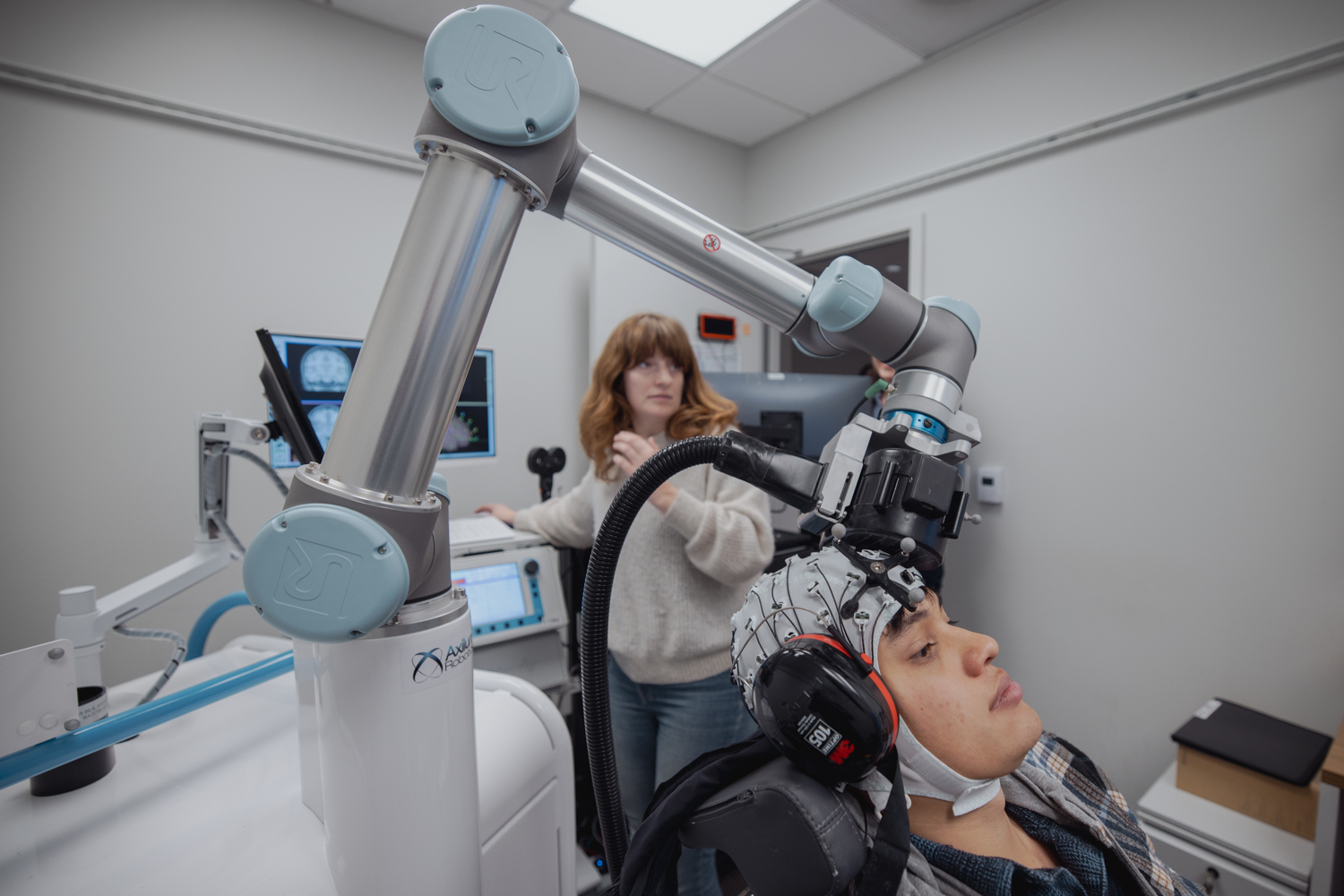
Koret Human Neurosciences Community Laboratory Director Milena Kaestner conducting a transcranial magnetic stimulation study. Photo: Andrew Broadhead.